A Ponzi is a spectrum, not a crime
Most legitimate institutions live somewhere between productive and inflow dependent. The question is never whether, but how far along the continuum a system sits.
A Measuring Instrument for National Economies
Every modern economy promises that tomorrow's money will cover today's obligations. This book measures how far America depends on it.
Coming soon on Amazon. Read the first idea now.
In 1920, Charles Ponzi promised 50% returns in 45 days.
He paid old investors with new investors' money.
He lasted barely a year.
The systems in this book have lasted decades. This is not an accusation. It is an instrument.
The Instrument
Illustrative position only. The book reads four separate measures and never reduces a system to one number.
Housing market
Rents reflect genuine shelter value, but price growth increasingly relies on the next buyer paying more, funded by ever larger debt. The further prices detach from incomes, the further right it sits.
The Evidence
what a household can afford vs. the median house
federal debt by mid 2026
the year wages stopped tracking productivity
What the Book Argues
Most legitimate institutions live somewhere between productive and inflow dependent. The question is never whether, but how far along the continuum a system sits.
No conspiracy is required. Each participant acts rationally inside the rules; the structure produces the dependency on its own.
Where do returns come from, and what happens when new money stops arriving? Answer honestly and any system reveals its position on the instrument.
FROM THE BOOK
This does not mean those systems are fraudulent. Fraud is a matter of intent and deception. Structure is a matter of mechanics. What it means is that legitimate systems and fraudulent ones can share structural DNA, and that the interesting question is not whether a system carries the label, but where it sits on the spectrum.
A Spectrum, Not a Category
Imagine a continuum.
At one end sit systems that are transparent, productive, and self sustaining. They generate value independently of new participants. A profitable farm, a factory with steady customers, a business that earns more than it spends: growth may enhance their returns, but it is not required for their survival. They can stand still without falling over.
At the other end sit systems that are entirely dependent on new inflows. They produce nothing, or almost nothing, of independent value. Without continuous expansion they fail, quickly and completely. These are the structures everyone recognizes as classic Ponzi schemes.
Between those extremes lies a wide and crowded middle ground: systems that generate real value but also rely, to varying degrees, on continued growth to remain stable. They are not fraudulent, but they are not fully self sustaining either. A pension plan that depends on a growing base of contributors. A national economy that requires credit expansion to avoid recession. A housing market in which today's prices are underwritten by the assumption of tomorrow's buyers. Each produces something real. Each also needs the inflow to continue.
This middle ground is the Ponzi Continuum, and most of the modern world lives on it.
The first chapter raised the possibility that the system may not function as assumed. This chapter has offered the lens for understanding how it actually operates. The Ponzi Continuum is not an accusation. It is an instrument. In the chapters ahead, it will be applied to the machinery of money itself, then to nations, and finally to the decisions of individual lives.
Available Soon
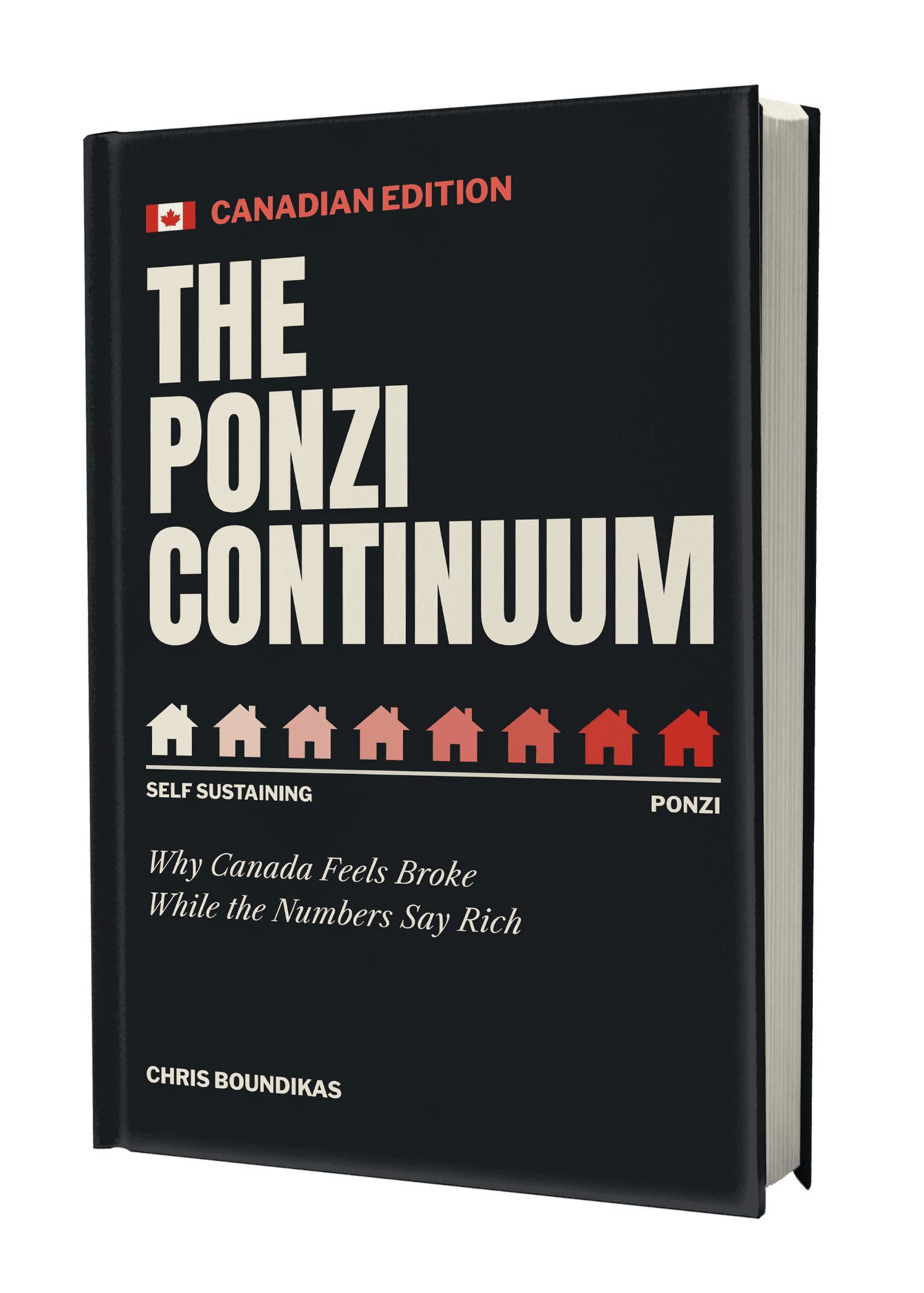
With Canadian data, cases and sources throughout
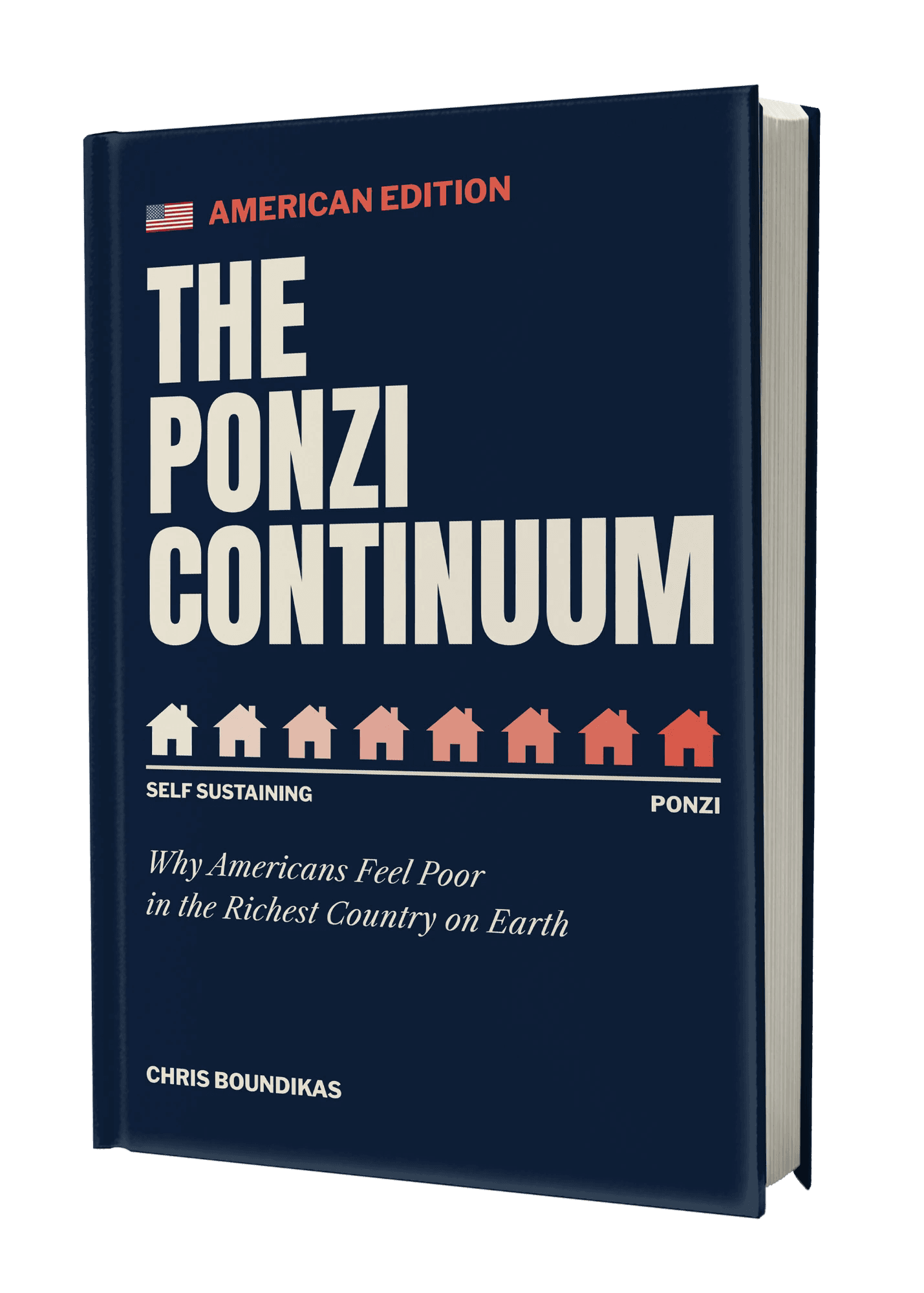
With American data, cases and sources throughout
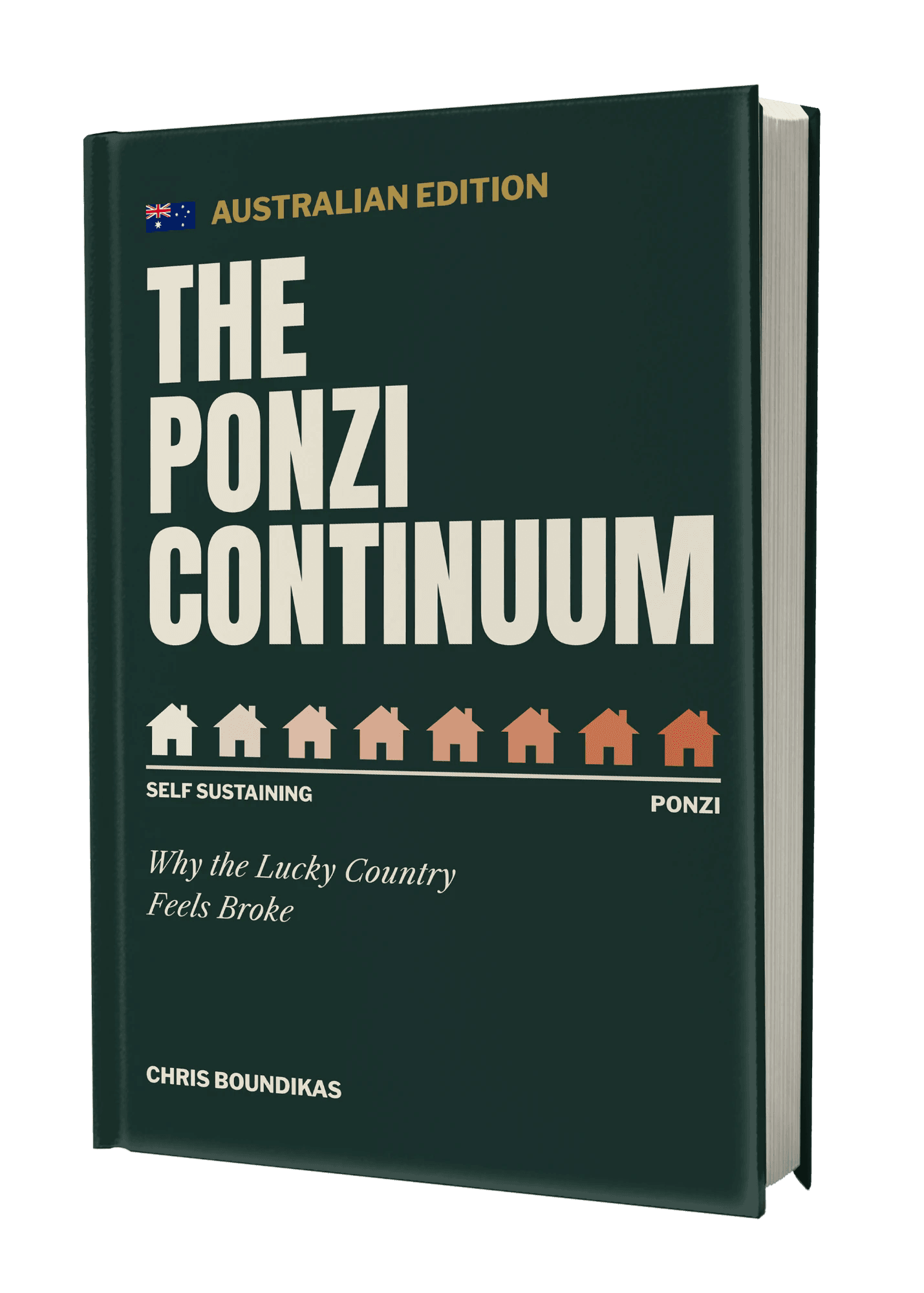
With Australian data, cases and sources throughout
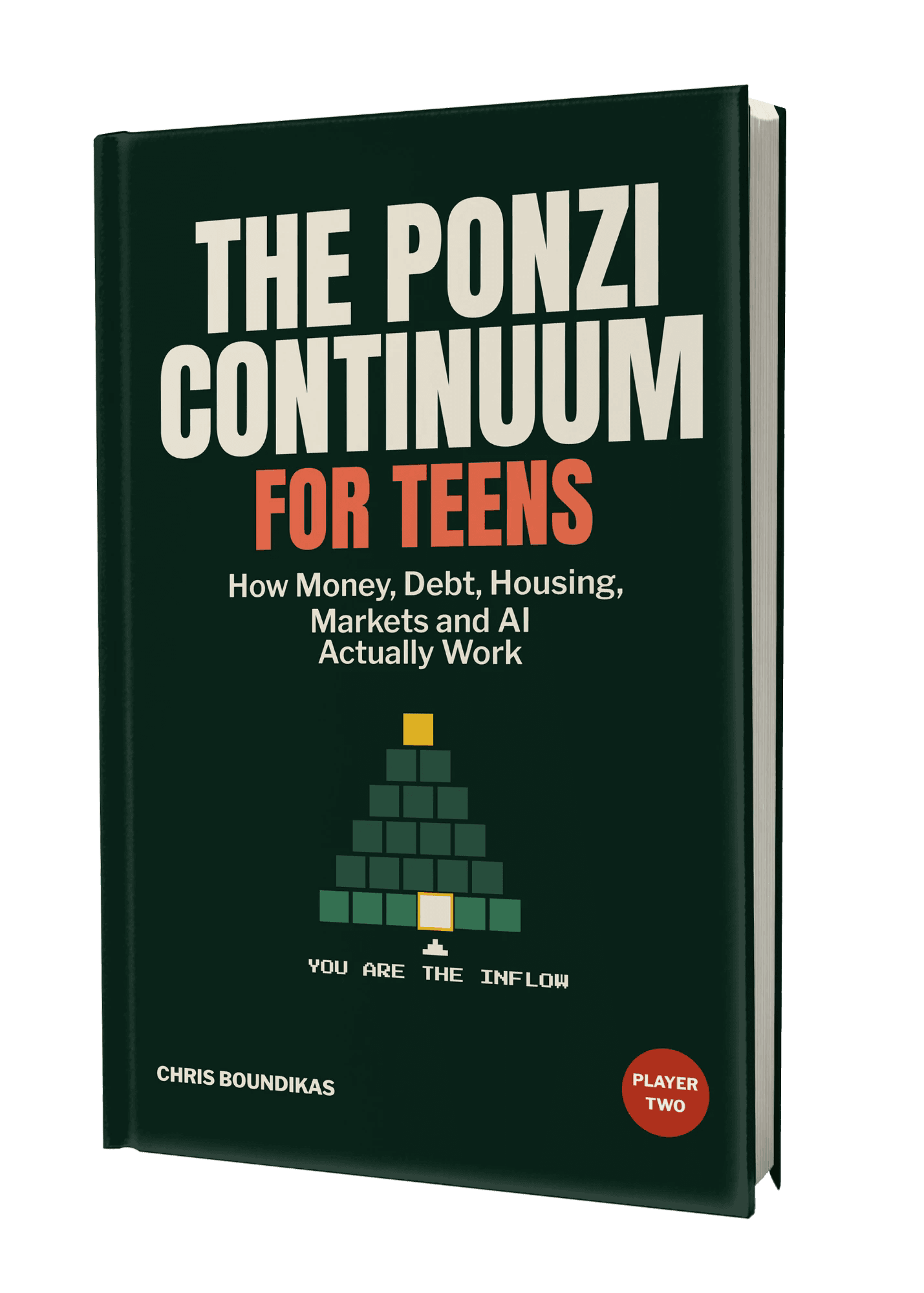
NEW: FOR TEENS
The same instrument, rebuilt for readers who are about to enter the game. Nearly every system in your life needs new money, new players, or new belief. This book teaches you to read which ones need you.
No lectures, no jargon. Four questions that reveal whether any system pays for itself or spends its players, and what it means when the new player is you.